Shower pooling or wastewater backing up
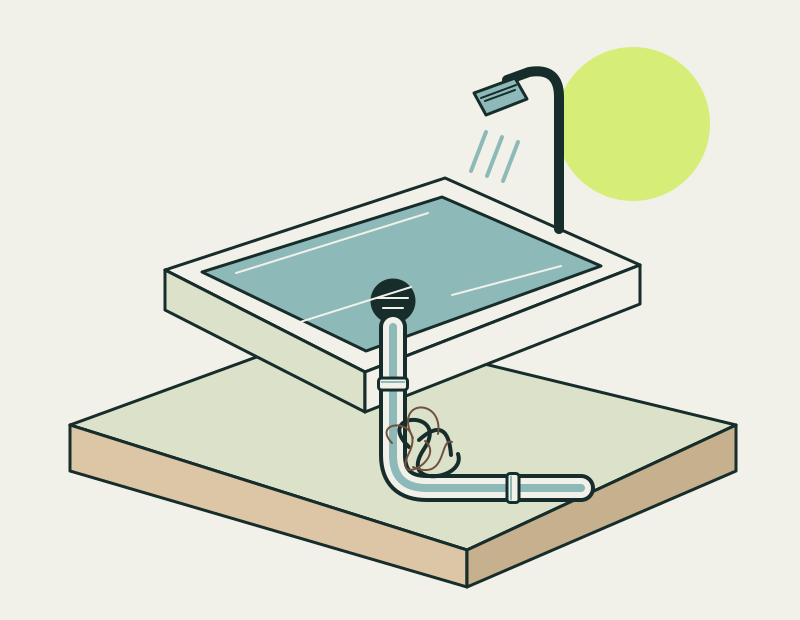
A tray that fills gradually while the shower runs suggests water is leaving too slowly. Water appearing when another fixture is used is a different pattern and should be reported clearly. If wastewater is backing up, avoid using affected fixtures until the situation is assessed rather than repeatedly testing the connection.
Restrictions in shower waste pipes
Hair and soap deposits are possible restrictions near a shower waste, but the obstruction may be further along the pipe. Nearby bathroom fixtures can share drainage routes. Note whether cleaning the accessible waste has made any difference and how quickly the symptoms returned; that history helps define the next enquiry.
Access beneath showers and wet rooms
Shower traps and concealed pipework vary in accessibility. A wet room outlet, raised tray and fully enclosed shower can present different working conditions. Describe the arrangement and any access panel, without dismantling finishes simply to investigate. Ask how access will be assessed before agreeing to work that affects the floor or enclosure.
Check for blockages beyond the shower
A shower that backs up when the toilet flushes may be showing a downstream restriction. Repeated symptoms after local clearance can justify further investigation of the connected drain. A survey is useful when it has a specific question to answer, such as the condition of a run that cannot otherwise be seen.
Details for a shower clearance quote
Include whether this is a shower tray or wet room, what triggers the problem and whether other fixtures are affected. Mention any chemicals or recent bathroom work. The quote should explain the intended clearance access and what happens if the obstruction cannot be reached without additional investigation or opening up.
Practical drainage questions
Your questions answered
Why does the shower fill when the toilet flushes?
A restriction beyond their shared connection can force wastewater into the shower. Stop further flushing and make clear that the water appears during toilet use, not just showering.
Can a wet room drain be assessed without lifting the floor?
Often the assessment can start through the outlet or another access point. Before any floor is opened, ask what less disruptive access has been considered and who will reinstate the finish.
Why does the shower drain slowly again after clearing?
Local cleaning may leave a restriction further along, or a pipe-layout problem may remain. Distinguish a drain that never fully cleared from one that worked normally before slowing again.